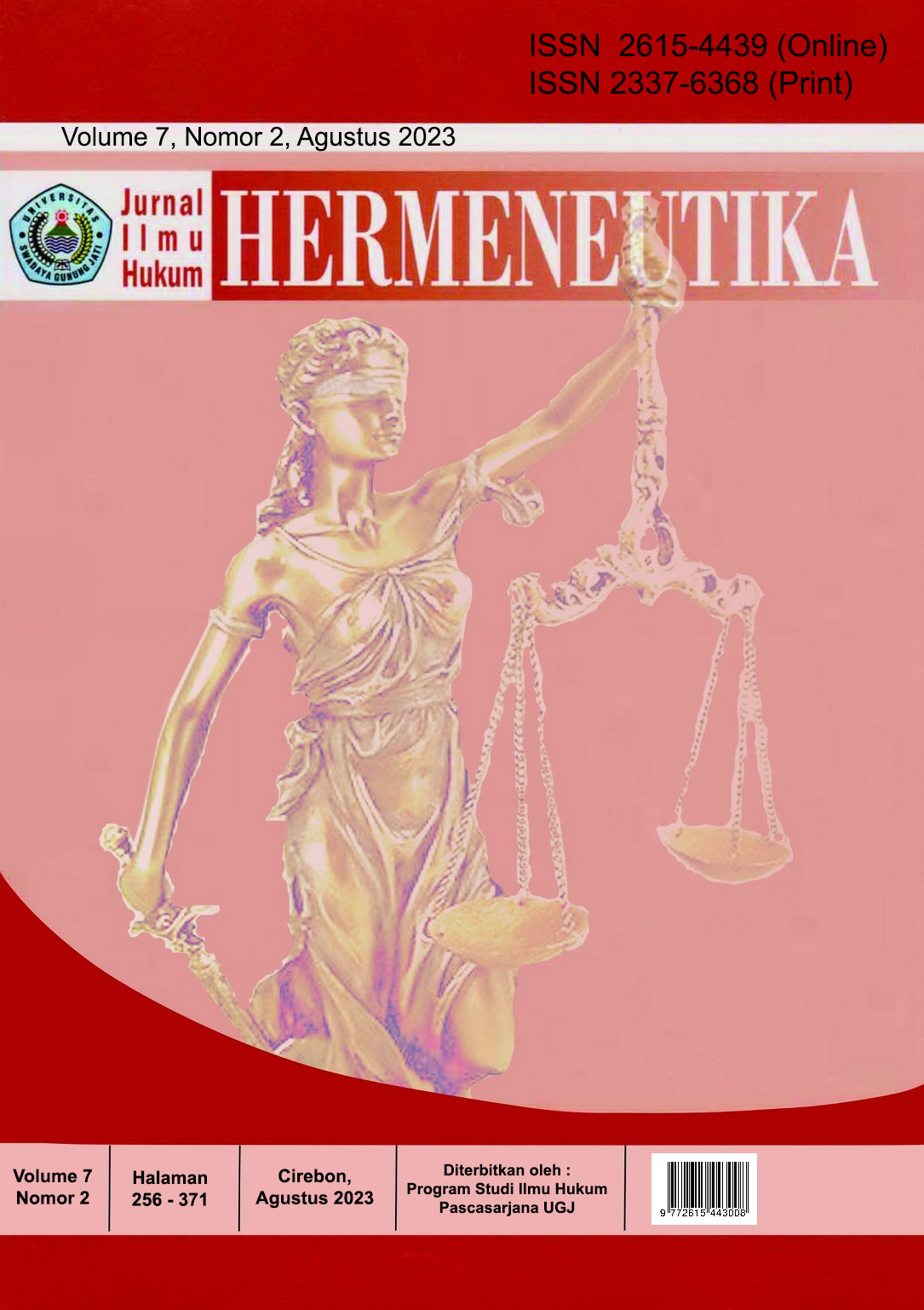
THE PENALTY OF ADULTRY ACCORDING TO QANUN ACEH NUMBER 6 OF 2014 ARTICLE 33 AND THE BOOK OF CRIMINAL LAW (KUHP) ARTICLE 284 IN THE PERSPECTIVE OF THEORY OF LEGAL EFFECTIVENESS
DOI:
https://doi.org/10.33603/hermeneutika.v7i2.8735Keywords:
Adultery Punishment, Aceh Qanun, Criminal CodeAbstract
References
Alyasa, Abu Bakar. (2004). Syariat Islam di Provinsi Nanggroe Aceh Darussalam-Paradigma, Kebijakan dan Kegiatan, Banda Aceh: Dinas Syariat Islam
Ananda, S. (2008) Tentang Kaidah Hukum. Jurnal Hukum Pro Justitia, 26 (1), 68-78
Forse, Michel, Anthony Giddens, Daniel Bell. (2005) Sosiologi, Yogyakarta: Kreasi Wacana,
Hadi, Amirul. ( 2010) Aceh Sejarah,Budaya, dan Tradisi,( Jakarta, Yayasan Obor Indonesia)
Lamintang. (1990) Delik-Delik Khusus: Tindak Pidana-Tindak Pidana yang Melanggar Norma-Norma Kesusilaan dan Kepatutan, Bandung: Mandar Maju.
Mardani. (2009) Hukum Acara Perdata Peradilan Agama Dan Mahkamah Syariah, Jakarta:Sinar Grafika
Moelyatno. (2008) KUHP Kitab Undang-Undang Hukum Pidana, Jakarta:Bumi Aksara.
Munajat, Makhrus. (2010) Fiqh Jinayah, Yogyakarta: Pesantren Nawesea Press.
Purbacaraka, Purnadi. (1974) Perihal Kaidah Hukum, Jakarta: Fakultas Hukum Universitas Indonesia.
Said, Muhammad (1981) Aceh Sepanjang Abad Medan: P.T. Percetakan dan Penerbitan Wapada Medan.
Saebani, Beni Ahmad H. Encup Supriatna. (2012) Antropologi Hukum, (Bandung, Pustaka Setia)
Soekanto, Soerjano.(1978) Sosiologi Suatu Pengantar. Cetakan VI, Jakarta: Yayasan Penerbit Universitas Indonesia.
Sudrajat dan Subana. (2001) Dasar-Dasar Penelitian Ilmiyah, Bandung: Pustaka Setia.
Suni Ismail. (1980) Bunga Rampai Tentang Aceh, Jakarta: Bhratara Karya Aksara
Tebba, Sudirman. (2003) Sosiologi Hukum Islam, Yogyakarta: UII Press Yogyakarta,
Wardi, Muslich Ahmad. (2006) Pengantar dan Asas Hukum Pidana Islam, Jakarta:Sinar Grafika.
Downloads
Published
Issue
Section
Citation Check
License
The Authors submitting a manuscript do so on the understanding that if accepted for publication, copyright of the article shall be assigned to Jurnal HERMENUTIKA, Sekolah Pascasarjana Ilmu Hukum. Universitas Swadaya Gunung Jati as publisher of the journal. Copyright encompasses rights to reproduce and deliver the article in all form and media, including reprints, photographs, microfilms, and any other similar reproductions, as well as translations.
Jurnal HERMENEUTIKA, Universitas Swadaya Gunung Jati and the Editors make every effort to ensure that no wrong or misleading data, opinions or statements be published in the journal. In any way, the contents of the articles and advertisements published in Jurnal HERMENEUTIKA are the sole responsibility of their respective authors and advertisers.