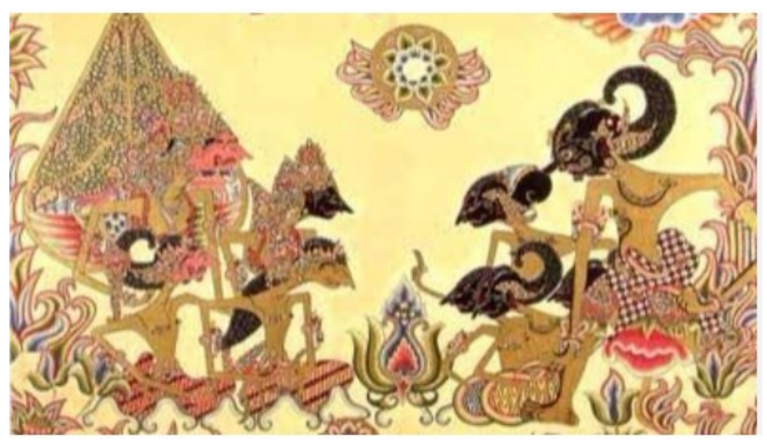
Wayang: Indonesia’s Cultural Legacy Animating Mythology and Epic Tales
DOI:
https://doi.org/10.33603/jshr.v5i1.11818Keywords:
Cultural Legacy, Epic Tales, Indonesia, Mythology, WayangAbstract
This article examines wayang as an Indonesian cultural heritage that brings mythology and epic narratives to life through historical, cultural, and philosophical perspectives, while also exploring young people’s interest in preserving Wayang Banyumas as a distinctive local puppetry tradition. This study employs a qualitative approach with a descriptive–exploratory design. The findings indicate that most respondents possess a basic level of familiarity with Wayang Banyumas, although their direct participation in live performances remains relatively limited. Knowledge of wayang is acquired through various channels, with social environments, educational institutions, and digital media emerging as the dominant agents of cultural transmission, while the influence of the family has gradually declined. In addition, the cultural consumption patterns of younger generations increasingly take place through virtual platforms rather than in situ performances. These findings suggest that interest in Wayang Banyumas among younger generations persists in a latent form and is strongly influenced by the modes and contexts of cultural presentation.
References
Abbas, N., Fathurrohman, M., Nashihin, H., & Zuhri, M. H. K. (2024). Moral values in the wayang petruk dadi ratu. Amorti: Jurnal Studi Islam Interdisipliner, 154–162.
Brannen, J. (2006). Cultures of intergenerational transmission in four-generation families. The Sociological Review, 54(1), 133–154.
Chen, Z., Hassan, A. Bin, & Ghazali, S. S. (2024). The Role of Community Education in China in the Transmission of Traditional Culture: A Systematic Literature Review. Int. J. Acad. Res. Bus. Soc. Sci, 14, 1–15.
Daryono, A. A., Setiawati, R., Pimay, A., Syukur, S., & Dwianto, A. (2024). The ethos of religious harmony of Javanese Muslims according to King Mangkunegara IV. Journal of Ecohumanism, 3(3), 230–247.
Dodiya, T. (2024). Reimagining Indian Myths on the Silver Screen: Unveiling the Transformative Journey in Indian Cinema. Exploring the Connections Between Ethnicity, History, Mythology and Literature, 67.
Dzikriyah, I., & Fauji, S. (2022). The Role of Kiai Syakirun in Preaching through the Using of Wayang Kulit in Tipar, Rawalo, Banyumas Regency (1998-2016). Journal of Islamic History and Manuscript, 1(1), 17–34.
Fibiona, I., Ariwibowo, G. A., Mumfangati, T., Nurwanti, Y. H., & Dwinanto, A. (2024). HERITAGE IN MOTION: SAFEGUARDING THE CULTURAL LEGACY OF WAYANG KULIT KEDU, INDONESIA. TRAMES: A Journal of the Humanities & Social Sciences, 28(2).
Hadzantonis, M. (2022). Malay, in the shadows: Anthropological reflections of Malay and the Wayang Kulit. Journal of Asian Pacific Communication, 32(1), 52–82.
Hanif, M., Karimah, F. A., Bambang Suharto, A. W., & Adib, S. (2024). Ki Ratmiko Siswo Carito’s Shadow Puppet Art in Forming Islamic Cultural Identity in Banyumas, Central Java: Holistic-Integrative Fiqh Perspective. Walisongo: Jurnal Penelitian Sosial Keagamaan, 32(1).
Hariyanto, H. (2018). The Wayang Performance of Enthus Susmono: A Resistance of Tegal-Pesisiran Identity in Breaking the Tradition Hegemony. Dance and Theatre Review, 1(1).
Hayati, H. (2024). LITERATURE IN RITUAL: AN ANTHROPOLOGICAL STUDY OF SCRIPTS AND PERFORMANCES IN WAYANG KULIT. AL IMTIYAZ: Arabic Linguistics and International Methodology for the Tarbiyah of Arabic Journal, 2(2), 77–84.
Hidayat, A. A., Supendi, U., Wahyuni, S. S., & Maulana, R. F. (2025). The Wayang as a Cultural Performance: Preserving Javanese Heritage in the Modern Era. International Journal of Applied Research and Sustainable Sciences, 3(5), 357–370.
Hu, Z., Ismail, R., & Wang, C. (2024). Identity and cultural allegory amidst the Chinese new era: Analyzing narrative strategies of the Chinese science fiction film. Cogent Arts & Humanities, 11(1), 2313339.
Lee, C.-T., Beckert, T. E., & Goodrich, T. R. (2010). The relationship between individualistic, collectivistic, and transitional cultural value orientations and adolescents’ autonomy and identity status. Journal of Youth and Adolescence, 39(8), 882–893.
Miles, M. B., Huberman, A. M., & Saldaña, J. (2018). Qualitative data analysis: A methods sourcebook. Sage publications.
Muthuswamy, V. V., & Esakki, S. (2024). Exploring Sustainable Cultural Preservation: Strategies, Challenges, and Community Engagement in Heritage Conservation Efforts. Rita Revista Indexada de Textos Academicos, 21.
Nugroho, S., Sunardi, S., & Murtana, I. N. (2019). The General Artistic Orientation of Wayang Kulit in the Folk Tradition in the Present Day. 2nd International Conference on Arts and Culture (ICONARC 2018), 84–86.
Purbasari, M., & Carollina, D. (2023). Traditional Wayang Research Productivity: A Bibliometric Analysis. Humaniora, 14(3), 205–214.
Rogers, R. A. (2006). From cultural exchange to transculturation: A review and reconceptualization of cultural appropriation. Communication Theory, 16(4), 474–503.
Sanusi, K., & Legino, R. (2015). Iconic transformations from Hinduism to Islamic art. Proceedings of the International Symposium on Research of Arts, Design and Humanities (ISRADH 2014), 65–77.
Sedana, I. N. (2019). Triadic Interplay: A Model of Transforming Literature into Wayang Theatre. SARE: Southeast Asian Review of English, 56(1), 11–25.
Sedana, I. N., & Foley, K. (2016). Traditional Indonesian theatre. In Routledge Handbook of Asian Theatre (pp. 71–94). Routledge.
Shaban, A. (2024). Digitalization, Cultural Production, Exchange, and Consumption. In Digital Geographies—Urbanisation, Economy, and Modelling: A Machine-Generated Literature Review (pp. 319–598). Springer.
Sharma, A., Sharma, R., & Rawat, S. R. (2025). Navigating the Leadership Crises Through Insights From Bhagavad Gita and Ramayana. In Business Management and Ethics: Insights from Indian Ethos (pp. 131–149). Emerald Publishing Limited.
Soedarsono, R. M. (2021). Wayang wong: The state ritual dance drama in the court of Yogyakarta. UGM PRESS.
Sullivan, A. M. (2015). Cultural heritage & new media: a future for the past. J. Marshall Rev. Intell. Prop. L., 15, 604.
Thiruchelvam, C. C., & Abdullah, S. (2019). The Essence of Wayang in Modern Indonesian Artworks: Examining the Works of Nasirun and Heri Dono. Malaysian Journal of Performing and Visual Arts, 5, 57–78.
Varela, M. E. (2014). Wayang Kontemporer: Innovations in Javanese Wayang. Wayang Kontemporer: Innovations in Javanese Wayang, 406.
Weifen, Q. (2022). A Study of Traditional Chinese Elements in Balinese Culture: An Acculturation Perspective. ARISTO, 11(1), 71–97.
Wibawa, A. B. (2024). Analyzing the evolution of Indonesian wayang puppetry and its fusion with modern theater and performance arts. Studies in Art and Architecture, 3(1), 1–9.
Yoesoef, M. (2018). Punakawan in N. Riantiarno’s Dramas: Revitalization of Local Cultural Values in Modern Theater. International Seminar on Recent Language, Literature, and Local Cultural Studies (BASA 2018), 398–405.
Downloads
Published
How to Cite
Issue
Section
Citation Check
License
Authors who publish with this journal agree to the following terms:
- Authors retain copyright and grant the journal right of first publication with the work simultaneously licensed under a Creative Commons Attribution License that allows others to share the work with an acknowledgement of the work's authorship and initial publication in this journal.
- Authors are able to enter into separate, additional contractual arrangements for the non-exclusive distribution of the journal's published version of the work (e.g., post it to an institutional repository or publish it in a book), with an acknowledgement of its initial publication in this journal.
- Authors are permitted and encouraged to post their work online (e.g., in institutional repositories or on their website) prior to and during the submission process, as it can lead to productive exchanges, as well as earlier and greater citation of published work.




 JSHR (Journal Socio Humanities Review) is licensed under a